
To fully understand how Evident's system works, we need to describe what we call a distributed data model.
Take a look at your driver's license or passport. On this single identity document, there are over 20 data points that are classified as Personally Identifiable Information (PII) and associated with your identity. This includes facts like the street number of your address, the street name itself, your first name, your last name and your date of birth. In a distributed data model, each piece of information is encrypted individually. Evident leverages this model so extensively that Evident will encrypt an individual's first name separately from their last name.
With Evident’s system, each of those 20+ data points is encrypted individually.
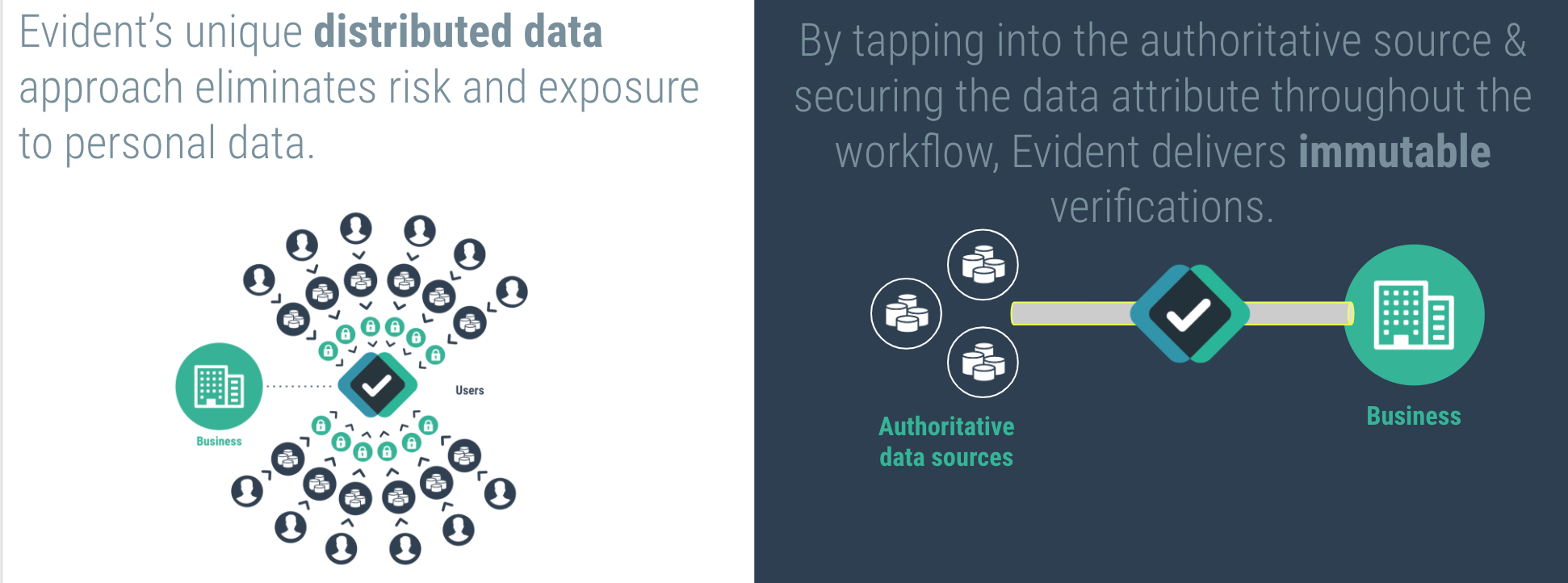
The result is that each piece of information associated with a particular identity would have to be accessed and unencrypted individually in order to be acquired by a bad actor. The complexity of this task is a major deterrent for bad actors because of the sheer effort. However, it also means that acquiring any meaningful amount of data on a single identity would take a long time and require a great deal of effort for very little payoff.
Let's talk about how this affects the structure of our platform.
Each piece of encrypted information that we’ve identified as something that you may want to see is called an attribute.

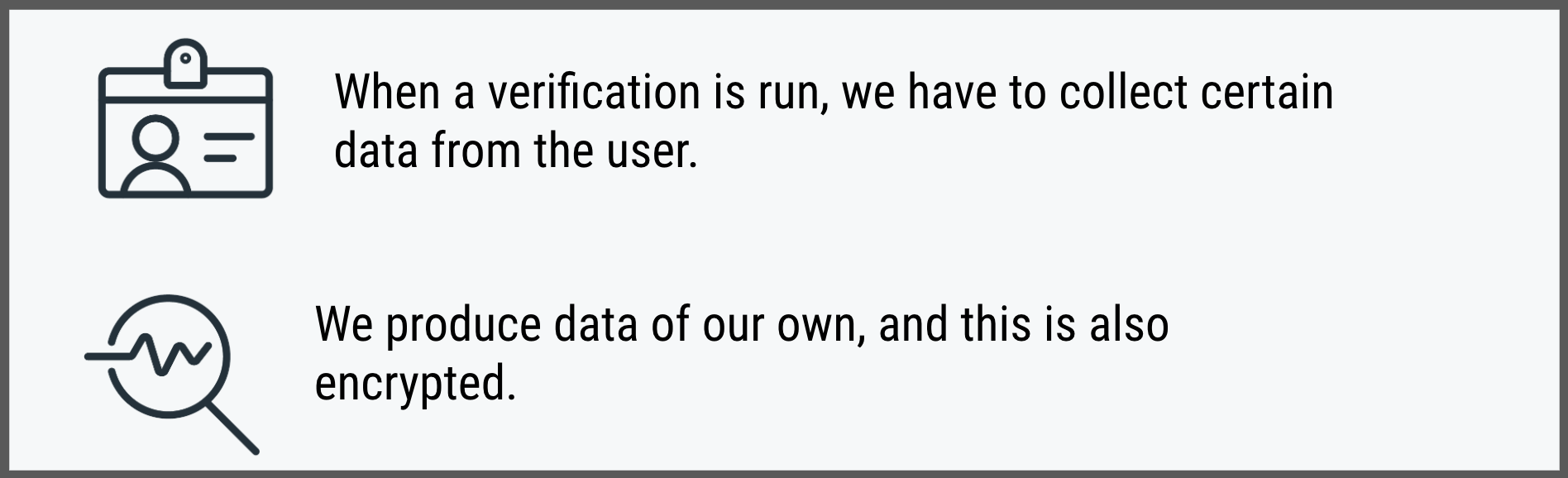
When Evident runs a verification, we have to collect certain data from the user, like the PII above. As a result of verifications, we also produce data of our own, like the results of the background check or identity verification.
When you request that Evident run a verification on your behalf, we reach out to the user and collect information from them. Then, we connect to the authoritative source, and ultimately turn results over to you. Here's what that process looks like:
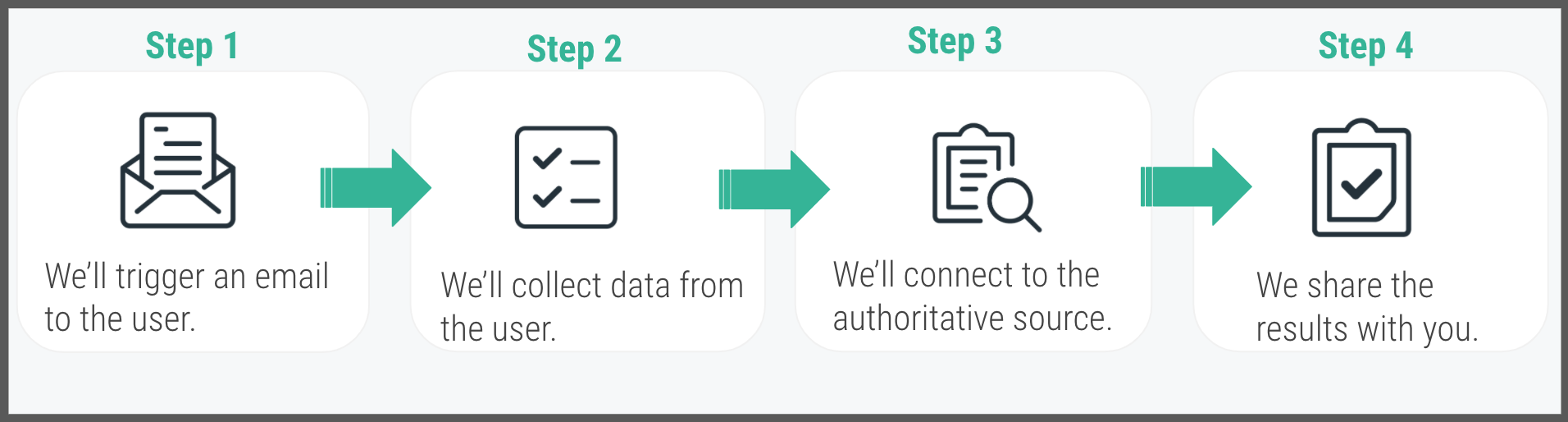
When we share the results with you, you'll almost always want to view the results of the verification. However, you might also want to view information that was collected to run to complete the verification, like name or date of birth.

Therefore, attributes can be either the results of a verification or data collected from the user that was required to run the verification.

Attributes are a fundamental component of the Evident platform, and having a basic understanding of them will help you understand the next basic component, requests. You can learn about requests here.